

Maximizing Operational Value: The Strategic Role of IQF Fruits and Vegetables
For modern food manufacturers, research and development teams, and foodservice operators across Canada, balance sheet performance is deeply tied to ingredient management. Balancing seasonal crop fluctuations, kitchen labour demands, formulation precision, and waste reduction requires deliberate ingredient choices. When raw materials enter a facility, their handling profile often determines the commercial margin of the final product.
Individually Quick Frozen (IQF) technology addresses these complex operational realities. By freezing individual pieces rapidly rather than in compact blocks, IQF ingredients allow operators to handle produce in free-flowing form. When procured through a disciplined partner like PRO Ingredients, IQF fruits and vegetables support consistent manufacturing lines and foodservice systems throughout the calendar year.
The Core Benefits of Rapid Individual Freezing
The core advantage of IQF processing lies in the thermodynamics of rapid freezing. Freezing food slowly creates large, jagged ice crystals that puncture cellular walls, which often leads to moisture loss and textural collapse upon thawing. Rapid individual freezing minimizes crystal size, which helps preserve the cellular integrity of delicate items such as berries, peppers, and leafy greens. However, the exact extent of quality preservation always depends on specific raw crop varieties, processing techniques, cold-chain storage conditions, and the final application parameters.
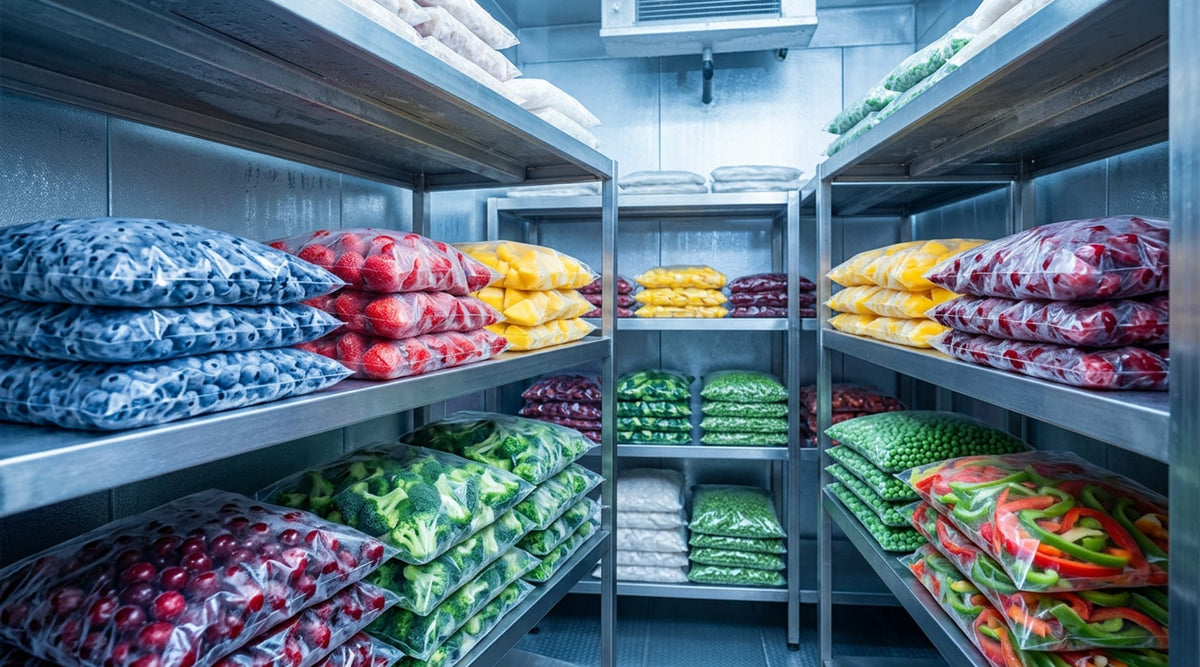
- Continuous Year-Round Availability: Overcome regional harvest calendars with reliable access to staples such as cherries, strawberries, broccoli florets, and sliced bell peppers regardless of season.
- Substantial Waste Reduction: By bypassing the natural spoilage curves of fresh produce, facilities can lower avoidable waste in storage and prep areas.
- Precise Portion and Inventory Control: Free-flowing pieces allow production teams to meter, weigh, and dispense precise quantities without defrosting entire cases.
- Labour Minimization: Eliminate repetitive cleaning, trimming, peeling, and dicing, freeing kitchen and floor staff to focus on high-value formulation tasks.
- Formulation Flexibility: Easily integrate ingredients into industrial batch mixers, commercial depositors, or small-batch food service prep bowls.
Operational Efficiencies Across Foodservice and Culinary Lines
In high-volume foodservice operations, speed of service and cost control govern kitchen viability. Traditional produce prep requires significant space, specialized equipment, clean water, and dedicated labour hours. Fresh inventory can also degrade rapidly under erratic seasonal demand, driving up food costs through trim loss and spoilage.
With free-flowing IQF inputs, line cooks and commissary staff scoop or pour exact gram weights directly into recipes. For commercial smoothie bars, casual dining chains, and catering teams, individually frozen mango chunks, mixed berries, and sliced onions reduce prep times while standardizing plate portions. Spoilage risk shifts from perishable days to managed cold-storage inventory, directly supporting tighter inventory holding costs and predictable operating margins.
Scaling Formulations in Industrial Manufacturing
For industrial food processors, R&D teams, and private label developers, moving from bench-top prototypes to high-speed commercial production lines introduces distinct engineering challenges. Ingredients must withstand continuous mechanical conveying, blending, thermal processing, and packaging.
Bakery and Confectionery Applications
In automated bakery production, excess moisture can compromise dough stability and cause bleeding in finished muffins, scones, or pies. Using structured items like wild blueberries or diced tart cherries enables predictable distribution throughout batter systems without premature thawing. Because freezing locks the piece geometry, depositor equipment can meter fruit without crushing it, preserving inclusion definitions in the baked state.
Prepared Meals, Soups, and Sauces
For commercial processors crafting prepared meals and frozen entrees, visual definition and piece integrity are critical. A vegetable medley featuring carrots, green beans, and cauliflower must maintain clear separation and distinct bite after retort or freezing. Because IQF pieces do not fuse during storage, automated multi-head weighers can quickly portion multi-component blends, such as mirepoix or fajita mixes, without bridging or clogging automated funnels.
Scalable Sourcing and Cold Chain Discipline
Procurement teams know that an ingredient specification is only as dependable as the supply chain supporting it. When dealing with frozen produce, cold-chain discipline from harvest site to regional North American warehouses is essential. Any temperature fluctuation during transit can lead to partial thawing and refreezing, creating clustered product blocks that disrupt automated manufacturing feeds.
PRO Ingredients provides the sourcing discipline and logistical oversight required to secure stable allocations of key produce lines. By monitoring global agricultural patterns and maintaining dedicated distribution pathways, PRO Ingredients supports R&D and procurement professionals in safeguarding their production schedules against regional crop shortages and market volatility.
Application Variables: Qualifying Performance Outcomes
While IQF processing delivers clear operational advantages, performance is never uniform across every recipe. Processing outcomes remain product-, process-, storage-, and application-dependent:
- Cell Structure and Drip Loss: Water-heavy items such as sliced zucchini or tomatoes naturally behave differently during thermal cooking than dense items such as corn or green peas.
- Cold Chain Storage: Consistency relies on sustained sub-zero temperatures throughout transportation, receiving, and internal storage prior to use.
- Processing Dynamics: High-shear blending, prolonged thermal heating, or aggressive batch pumping can alter the texture and appearance of any IQF ingredient.
Evaluating these variables early in the development cycle allows manufacturers to calibrate their cook cycles, starch systems, and mixing protocols effectively.
Building Resilient Operations with PRO Ingredients
Navigating changing ingredient markets requires moving away from spot purchases and working with a partner invested in your long-term operational success. Whether your facility is formulating new ready meals, scaling bakery operations, or managing multi-unit foodservice kitchens, IQF produce offers a reliable foundation for menu and formulation stability.
PRO Ingredients works alongside product developers, procurement managers, and operations leaders to align technical ingredient specifications with real-world manufacturing requirements. Explore our extensive portfolio of IQF fruits and vegetables or reach out directly to evaluate sample profiles, discuss cold-chain logistics, and plan your ingredient allocations. Contact us today to review your ingredient requirements and strengthen your supply chain.


